

Reviewed and updated August 2026 by Coral Jacobs, AJ Home Loans Gladstone. Suburb figures are rounded and indicative. Check current data before you buy.
Gladstone has had a strong run. Across the fifteen suburbs tracked on this page, every single one recorded double-digit house price growth over the twelve months to June 2026, and the rental market is still tighter than the Real Estate Institute of Queensland considers healthy. This page sets out where prices and rents actually sit, what is driving them, and what the numbers mean if you need to borrow.
The Gladstone property market at a glance
- House medians across the tracked suburbs run from about $460,000 in Barney Point to about $785,000 in Tannum Sands.
- Twelve-month growth ranged from 10.9% in Kin Kora to 23.9% in Sun Valley. No tracked suburb went backwards.
- Houses are selling in roughly 30 to 48 days depending on the suburb.
- Gross house yields sit around 4.4% to 5.6%. Unit yields are generally higher, around 5.6% to 6.5%.
- The 4680 vacancy rate was 2.1% for the June quarter 2026, up from 1.8% in the second half of 2025.
- Median weekly rents were about $510 for a three-bedroom house and about $580 for a four-bedroom house.
House figures are realestate.com.au suburb medians for the twelve months to June 2026, read on 27 July 2026. Vacancy and rent figures are from Opteon's Gladstone Half Time Review 2026, published 11 August 2026. Both are linked in the sources at the bottom.
Where Gladstone house prices sit in 2026
There is no single Gladstone median that tells you anything useful, because the spread between suburbs is wide. Barney Point sits near $460,000 while Tannum Sands sits near $785,000, and both are the same drive from the same industrial employers. Picking a suburb on the regional median alone is how buyers end up surprised at the contract stage.
Growth has been broad rather than concentrated. Sun Valley led the tracked suburbs at 23.9% over the twelve months to June 2026, with Gladstone Central at 19.8%, Glen Eden at 19.1%, Tannum Sands at 18.9% and Boyne Island at 17.9%. Even the slowest, Kin Kora at 10.9%, still ran in double digits. A market where the weakest suburb grew 10.9% is a market where last year's listing price is a poor guide to this year's.
Stock is moving quickly. Median days on market ranged from about 30 days in Calliope to about 48 days in Barney Point, Tannum Sands and Boyne Island. At that pace, pre-approval is not paperwork you sort out after you find something. It is the thing that lets you act when you do.
Use the suburb map above to compare a specific suburb rather than working from the regional picture. It reads from the same figures and updates when they do.
Houses and units are two different markets here
Most Gladstone commentary quotes house medians and stops there. That hides a real difference in how the two property types behave, and it matters for anyone weighing income against capital growth.
Unit medians sit well below house medians in the same suburbs: about $310,000 in South Gladstone against $559,000 for houses, about $370,000 in Gladstone Central against $560,000, about $375,000 in Barney Point against $460,000. Because rents do not fall in the same proportion, indicative gross unit yields generally land higher than house yields, in the range of about 5.6% to 6.5% against roughly 4.4% to 5.6% for houses.
Higher yield is not automatically the better buy. Units carry body corporate levies that houses do not, the buyer pool on resale is smaller, and in a market with a single dominant employment base a unit is usually the first thing to sit vacant when demand softens. Lenders also treat some unit types differently, particularly smaller floor plans, which can change the deposit you need. It is worth pricing the whole picture rather than the headline yield.
The Gladstone rental market in 2026
Vacancy in the 4680 postcode was 2.1% for the June quarter 2026, up from 1.8% in the second half of 2025, according to Opteon's Gladstone Half Time Review published on 11 August 2026. The REIQ classifies a healthy vacancy rate as 2.6% to 3.5%, so Gladstone is still tighter than healthy, even after loosening slightly.
Rents have largely stopped climbing. Opteon reports median weekly rents of about $510 for a three-bedroom house and about $580 for a four-bedroom house, with average rental growth of 3.5% across the twelve-month period and low single-digit movement across most segments. After several years of sustained increases, that is a market finding its level rather than one still running.
For an investor, the practical read is that rent evidence is now more reliable than rent optimism. A yield built on the rent a property currently achieves is a much safer basis for a loan application than one built on where rents were heading two years ago. Lenders weigh that evidence differently from one another, which is worth working through before you commit to investment loans in Gladstone.
How to read the suburb data
- Median price is the middle point of recent sales. It is not the cheapest house available and not the highest sale in the suburb. A suburb with a wide range of housing can have a median that matches almost nothing actually on the market.
- Median rent is the typical weekly rent reported for houses in that suburb or the broader Gladstone market. It is not a guarantee of what one particular property will achieve.
- Gross yield compares annual rent with the purchase price before expenses. It excludes council rates, insurance, maintenance, property management fees, vacancy periods and loan costs, all of which come out of the same rent.
The figures are rounded on purpose. Over-precise numbers create false confidence in a market this small, where a handful of sales can move a suburb median.
Gladstone suburbs compared
South Gladstone, accessible entry with strong recent momentum
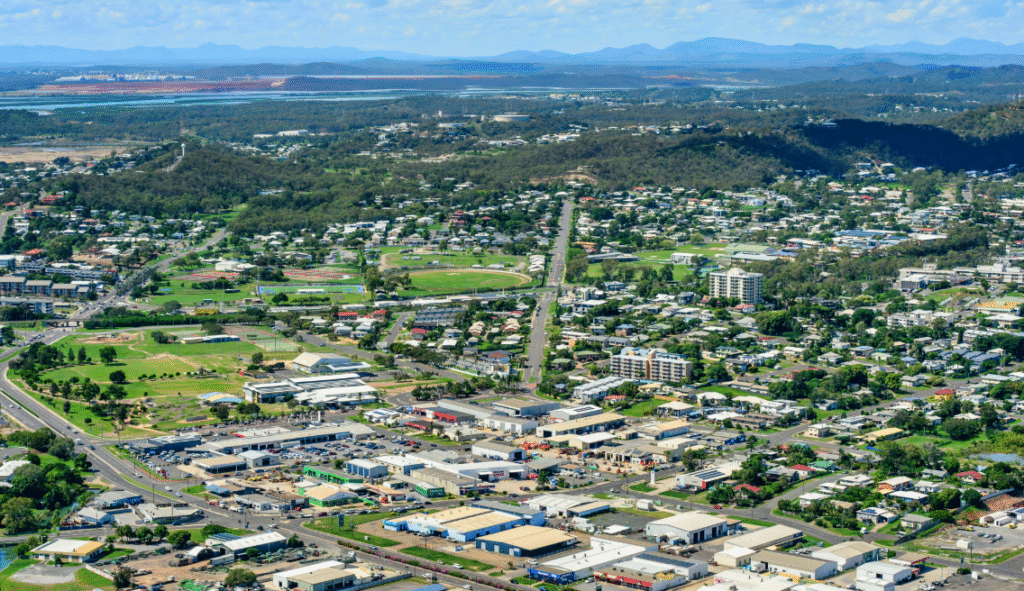
- Investor profile: value-focused buyers, renovators, and investors looking close to central Gladstone
South Gladstone remains one of the more accessible investor suburbs in the Gladstone market. It has a mix of older housing, renovation opportunities, and properties close to services. Over the 12 months to June 2026, realestate.com.au reported growth of 11.8% on a median around $559,000. Some providers have published growth rates near 39% for this suburb. We could not verify those and do not rely on them.
For buyers, the appeal is simple: entry prices are still lower than many family and lifestyle suburbs, while rent demand remains healthy. It is often where first home buyer loans stretch furthest in Gladstone. The key is to inspect property condition carefully. A cheaper house can turn into a poor investment if it needs major structural work, roof repairs, drainage fixes, or expensive upgrades before it can attract a good tenant.
West Gladstone, central convenience and family rental demand
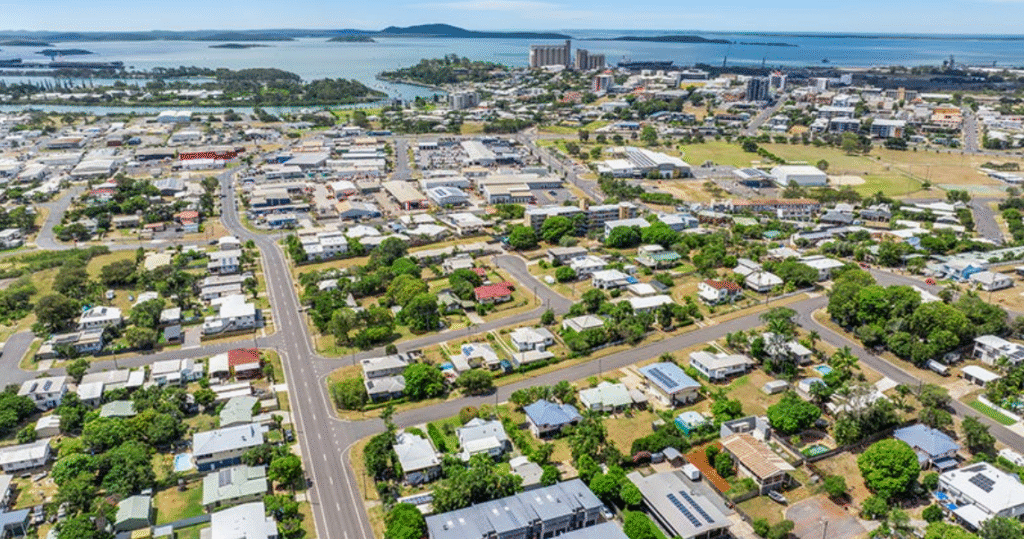
- Investor profile: practical buy-and-hold investors wanting central access
West Gladstone is a practical suburb for investors who want proximity to schools, parks, shops, and central Gladstone. It has a more balanced feel than some high-yield areas because it appeals to both tenants and owner-occupiers.
The suburb is not just a cheap yield play. Its strength is convenience. That can make it easier to attract families, long-term tenants, and buyers who want everyday services nearby. Investors should compare 3-bedroom and 4-bedroom houses carefully because the rental gap can be meaningful.
Clinton, owner-occupier stability and family appeal
- Investor profile: long-term investors who want family tenant appeal and market stability
Clinton is one of Gladstone’s more established family suburbs. It has strong owner-occupier demand, access to schools and amenities, and a broader family buyer pool than some of the lower-entry suburbs.
The trade-off is price. Clinton generally requires more capital upfront than South Gladstone or Barney Point, so yield may not look as exciting on paper. For some investors, that trade-off is worth it because family suburbs can offer steadier demand, lower turnover, and better resale appeal.
Kin Kora, limited stock and steady family demand
- Investor profile: buyers looking for a balanced suburb with family appeal
Kin Kora is a smaller suburb with strong owner-occupier appeal and limited housing stock. That can support prices when demand rises, but it also means buyers may have fewer suitable properties to choose from.
The suburb suits investors who want a balance between yield and long-term demand. It is not necessarily the cheapest entry point, but the combination of family appeal, rent support, and limited supply can make it worth monitoring.
Kirkwood, modern homes and lifestyle-driven demand
- Investor profile: buyers targeting newer housing stock and family tenants
Kirkwood appeals to buyers who prefer newer housing estates, modern layouts, and family-friendly streets. It can attract quality tenants, but the higher purchase price means the yield may be lower than cheaper suburbs.
This suburb is better suited to investors who care about long-term tenant appeal and resale demand, not just the highest possible rental return. The right property can still work well, but buyers need to run the numbers properly because the entry price is no longer low.
Barney Point, lower entry pricing with stronger due diligence required
- Investor profile: yield-focused buyers who understand location and tenant trade-offs
Barney Point still offers the most affordable entry point of the suburbs on this page, with a median sold price around $460,000 over the 12 months to June 2026. Other providers publish a wider range for this suburb, because a small number of sales moves a small market. The suburb can still work for yield-focused buyers, but the buying decision should be based on current comparable sales rather than broad suburb averages.
The suburb can suit investors chasing stronger rental return relative to price. However, buyers need to consider the surrounding industrial context, street-by-street appeal, property condition, and tenant demand before jumping in. A good purchase here can work well, but the suburb needs more due diligence than a straightforward family suburb.
Tannum Sands, lifestyle suburb with a higher buy-in
- Investor profile: buyers wanting coastal lifestyle demand and long-term owner-occupier appeal
Tannum Sands is not a cheap entry suburb anymore. It is a lifestyle market with coastal appeal, strong community demand, and a higher purchase price than central Gladstone suburbs.
For investors, the attraction is not just yield. It is the broader buyer pool, lifestyle appeal, and long-term desirability. That can be useful for future resale, but the higher price means buyers need to be disciplined with repayments and rental assumptions.
Boyne Island, lifestyle appeal with rent support
- Investor profile: buyers wanting a lifestyle location with stronger rent support than many premium suburbs
Boyne Island offers river and lifestyle appeal while still maintaining reasonable rent support. It sits above the cheaper Gladstone suburbs on price, but it can still make sense for investors who want a stronger lifestyle component in the asset.
The main thing to watch is property type. A well-located family home may attract better long-term demand than a property that looks good on yield alone but has weaker resale appeal.
New Auckland, modern housing stock with broader tenant appeal
- Investor profile: buyers wanting modern homes and a family tenant base
New Auckland has moved into a higher price bracket, with a median sold price around $643,000 over the 12 months to June 2026. This makes it less of a bargain entry market and more of a family-oriented investment option.
It can suit buyers who prefer newer homes, good tenant appeal, and less renovation risk. The numbers need to be checked carefully because the higher purchase price can reduce cash flow if the loan is heavily geared.
Gladstone Central, central location with mixed property stock
- Investor profile: buyers who understand mixed stock, units, and central-market volatility
Gladstone Central can look attractive because of the entry price and rental demand, but the data spread is wide. Some providers show much lower medians than others because the suburb has a mix of houses, units, and central-area stock.
This is a suburb where buyers should not rely on a single median. Compare recent comparable sales, check whether the data is for houses or units, and factor in body corporate costs if buying an apartment or townhouse.
Honourable mentions
Calliope can appeal to buyers who want larger blocks, semi-rural lifestyle, and family demand outside central Gladstone. It should be assessed separately because its market drivers differ from inner Gladstone suburbs.
Toolooa, Telina, Sun Valley, and Glen Eden can also be worth watching, but buyers should use current suburb-level data before making a decision. In smaller suburbs, sale volume can be low, which makes medians jump around more than people realise.
What is driving the Gladstone market
Gladstone's economy runs on heavy industry: LNG, alumina, port operations, mining services and a growing renewables pipeline. That base is why the rental market stays tight through cycles that soften other regional Queensland markets, and it is also the concentration risk worth understanding before you buy.
Several projects sit behind current demand. The Fitzroy to Gladstone Pipeline and the Port of Gladstone Channel Duplication are both in the state pipeline, the Aldoga Solar Farm has reached full commercial operations, and the Gladstone Energy and Ammonia Project is progressing through the Coordinator-General's process. Each is linked in the sources below. Projects of that size move workers into rentals well before they move buyers into mortgages, which is part of why rents moved first in this cycle.
The outlook for 2026
We are not going to publish a price prediction for Gladstone, because nobody can produce one honestly for a regional market this exposed to a handful of employers. What can be said is which way the current signals point.
Vacancy loosening from 1.8% to 2.1% and rental growth slowing to 3.5% both suggest the rental squeeze that drove the last few years is easing rather than tightening. Days on market in the 30 to 48 day range suggest buyer demand is still real but no longer frantic. Growth that ran 10.9% to 23.9% across every tracked suburb is not a rate that usually repeats twice in a row.
Taken together, that reads as a market moving from rapid catch-up towards something steadier. It is a reasonable environment to buy in with realistic numbers, and a poor one to buy in assuming the last twelve months will happen again.
Risks worth weighing before you buy
- Employment concentration. A region built on a small number of large industrial employers moves further in both directions than a diversified one. Gladstone's own history through the gas construction boom and the downturn that followed is the clearest illustration available.
- Unit supply and resale depth. Higher unit yields come with a smaller resale buyer pool and body corporate costs.
- Rent assumptions. With growth slowing to low single digits, a purchase priced on continued rapid rent rises has little margin.
- Property-specific condition. In suburbs with older housing stock, the difference between two houses on the same street can be larger than the difference between two suburbs.
What this means for your borrowing
The suburb you choose changes your loan more than most buyers expect, and not only through the purchase price.
Some lenders apply postcode or suburb-level policies inside 4680, so the same borrower with the same deposit can get a different answer at different banks depending on which Gladstone suburb the property sits in. It is genuinely unusual, it is not published anywhere a buyer would find it, and it is one of the more practical reasons to have someone check policy before you sign a contract rather than after.
Income type matters just as much here as the property does. Gladstone runs on shift work, overtime and allowances, and lenders treat those very differently. Some will assess casual income as permanent where the borrower has been in the same role long enough on consistent shifts. Others discount it heavily or price it higher. Coral's background is in payroll, which is why the income questions on the first call are more detailed than most: how the income is actually structured usually decides how much of it a lender will count, subject to that lender's own assessment.
If you are buying in Gladstone, the loan structure deserves the same attention as the suburb. A property with a healthy yield can still be uncomfortable to hold if it is financed poorly, so it is worth comparing home loans in Gladstone across a full lender panel rather than taking the first approval offered.
Frequently asked questions
Is Gladstone a good place to invest in 2026?
Gladstone offers house prices well below most of coastal Queensland, a rental market still tighter than the REIQ's healthy band, and an industrial employment base with several large projects behind it. The trade-off is concentration: the same industry base that supports rents is what makes the region move harder in a downturn. It suits buyers who check current sales and rent evidence for the specific property rather than buying the regional story.
What is the median house price in Gladstone?
There is no single useful figure, because suburb medians range from about $460,000 in Barney Point to about $785,000 in Tannum Sands over the twelve months to June 2026. Opteon reported a 4680 postcode dwelling median of about $650,000 before the Budget and about $630,000 between 13 May and 30 June 2026. Compare at suburb level rather than region level.
Which Gladstone suburb grew the most in the last year?
Across the suburbs tracked here, Sun Valley recorded the strongest twelve-month house growth at 23.9%, followed by Gladstone Central at 19.8% and Glen Eden at 19.1%, for the twelve months to June 2026. Every tracked suburb grew by at least 10.9%.
What is the rental vacancy rate in Gladstone?
Opteon reported 2.1% for the June quarter 2026, up from 1.8% in the second half of 2025. The REIQ classifies 2.6% to 3.5% as a healthy vacancy rate, so Gladstone remains tight by that measure.
Which Gladstone suburb has the highest rental yield?
Among houses, Barney Point showed the strongest indicative gross yield at about 5.6%, followed by South Gladstone at about 5.3%. Unit yields generally run higher than house yields across the region. Yield alone is not a ranking of which property is the better buy.
Is it better to buy a house or a unit in Gladstone?
Houses dominate most Gladstone suburbs and carry the land value and the deeper resale buyer pool. Units cost less to enter and generally show higher gross yields, but come with body corporate costs, a narrower resale market and different lender treatment. Which one suits you depends on whether you are buying for income or for holding power.
How long do houses take to sell in Gladstone?
Median days on market ranged from about 30 days in Calliope to about 48 days in Barney Point, Tannum Sands and Boyne Island over the twelve months to June 2026. That is quick enough that finance should be organised before you start looking.
Sources and further reading
Australian Bureau of Statistics Census QuickStats: Gladstone Region
Queensland Government: Fitzroy to Gladstone Pipeline
Queensland Coordinator-General: Port of Gladstone Channel Duplication Project
Queensland Government: Gladstone Energy and Ammonia Project
Realestate.com.au and property.com.au suburb data should be checked at the time of purchase because suburb medians, rents, and stock levels change frequently.
Opteon: Gladstone Half Time Review 2026, published 11 August 2026
Real Estate Institute of Queensland: residential vacancy rate classifications